Media Literacy for Teachers: Ready-to-Teach Lessons
For teachers and schools · 6 lessons · 102 min · 6 quizzes · 5 games · €40.00
A course for lower and upper secondary teachers, safeguarding and prevention leads, and – with adaptations – upper primary teachers. It is not media theory: it is **ready-made lessons you can teach tomorrow**. Every lesson includes objectives, materials, a minute-by-minute plan in a table, a printable worksheet, reflection questions, assessment tips and an online-teaching variant. Topics: fact and opinion, scam messages and phishing, charts and numbers in the news, artificial intelligence and deepfakes. You will play the interactive games yourself first – and can then use them in exactly the same way with your pupils. The course ends with a test covering both content and teaching methods. The course is not an accredited professional qualification; it is practical teaching material for your classroom.
No sign-up and no payment.
Part of the certification:Media Literacy Educator
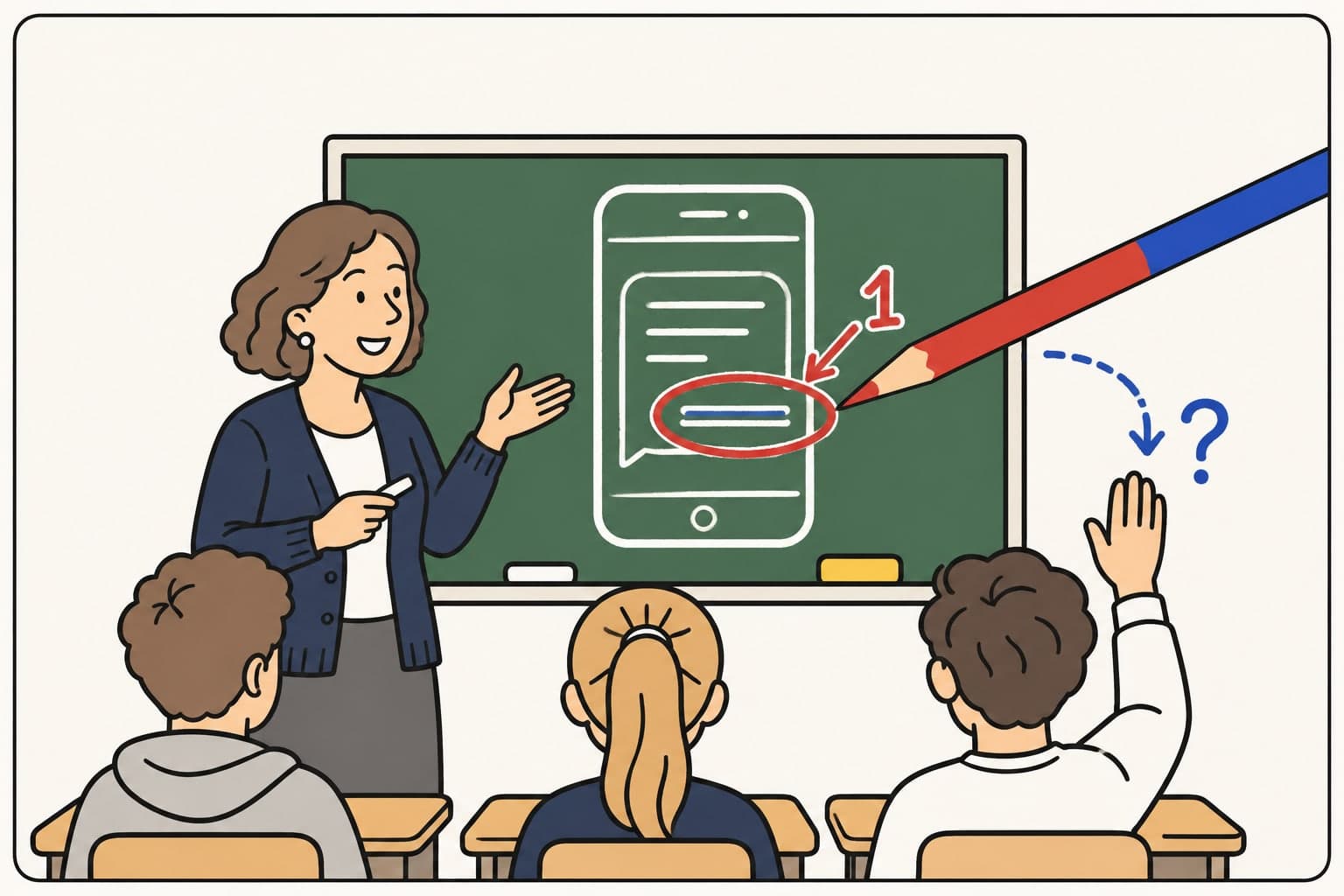
Course contents
- 1Teaching Critical Thinking Pupils Actually EnjoyFive principles that turn media literacy into a lively lesson rather than a lecture – and one complete 15-minute activity you can use straight away.Free – try it15 min
- This lesson is part of a paid courseLesson 1: Fact or Opinion?A complete 45-minute lesson: pupils learn to tell verifiable claims from value judgements and to spot 'mixed' claims that disguise opinion as fact.18 min
- This lesson is part of a paid courseLesson 2: Spot the Scam and PhishingA complete 45-minute lesson: acting as 'detectives', pupils learn to recognise the warning signs in scam texts, emails and social media messages – and know what to do if they get caught out.18 min
- This lesson is part of a paid courseLesson 3: Reading Charts and Numbers in the NewsA complete 45-minute lesson linking maths and media literacy: truncated axes, percentages without a baseline, cherry-picked time periods and averages that say nothing.18 min
- This lesson is part of a paid courseLesson 4: AI and Deepfakes at SchoolA complete 45-minute lesson on recognising and checking AI-generated content, why deepfakes harm real people, and how to agree class rules for using AI honestly.18 min
- This lesson is part of a paid courseFinal TestTen questions across the whole course – content and teaching methods. Complete all lessons to receive your certificate of completion.15 min
About this course
- Author
- Pavel Cinkeis, MBA, MPA (sources and procedures checked by the Kriticky.cz editorial team)
- Updated
- Sources
- Roozenbeek & van der Linden (2019): Fake news game confers psychological resistance against online misinformation (Palgrave Communications) (opens in a new window)
- Lewandowsky, Cook, Ecker et al. (2020): The Debunking Handbook 2020 (opens in a new window)
- Digital Inquiry Group: Civic Online Reasoning (opens in a new window)
Show all 6 sources
- European Commission (2022): Guidelines for teachers and educators on tackling disinformation and promoting digital literacy through education and training (opens in a new window)
- UNESCO (2021): Media and Information Literate Citizens: Think Critically, Click Wisely! (Media and Information Literacy Curriculum for Educators and Learners) (opens in a new window)
- UNESCO (2023): Guidance for generative AI in education and research (opens in a new window)
What next
Try lesson 1 for free: Teaching Critical Thinking Pupils Actually Enjoy
15 min · free · no sign-up