Skip to content
Search

Text and colours

Text size
Colours

This browser remembers your settings.

Kids and schools

Missions that teach children not to fall for it

Short missions for children aged 8 to 15: spot an ad, a made-up story, a scam in a game or an edited photo. At home with parents and at school on the projector.

  • Free
  • No account
  • No ads
  • No points or leaderboards

For parents ↓For teachers ↓Safety and privacy ↓

Choose by age

Illustrative example

A message in Cubehaven from a player you don’t know

Scientists have found that Cubehaven is the best game in the world⁠ (note 1)!

  1. note 1, “the best game in the world”: “Best” is an opinion, not a fact

Sample no. 73

Ages 8–11 · Primary schoolFree · no sign-up

Junior Detectives

Six short missions with a detective team: fact or opinion? Ad or advice? Photos that lie, who wrote what, what not to share about yourself and chain messages.

6 missions · missions of 6 minutes

Made-up example based on real scams

Game chat – a message from a player you don’t know

Hi! I’m giving away 5,000 free crystals⁠ (note 1). Message me privately if you want some.

  1. note 1, “I’m giving away 5,000 free crystals”: Free crystals are bait

Sample no. 74

Ages 11–15 · Lower secondary schoolFree · no sign-up

Not Falling for It

Seven lessons about what teenagers really run into: scams in games, clickbait, hidden ads by influencers, AI mistakes, edited screenshots and deepfakes, the recommendation bubble and numbers that mislead.

7 missions · missions of 8 minutes

For parents: do it together

Younger children get the most out of the missions when you go through them together. Each ends with questions to talk about and one tip for you – and then talking about what your child meets online comes naturally.

Start the first mission with your child →

Example diploma. The child’s name stays in the browser only.
  • A mission takes 5–8 minutes. A phone, tablet or computer is enough.
  • Your child needs no account. Only the browser remembers completed missions.
  • After the last mission, your child can print a diploma with their name.

For teachers

The missions also work as a ready-made start to a media literacy lesson. The basics are free; lesson plans come in the class kits.

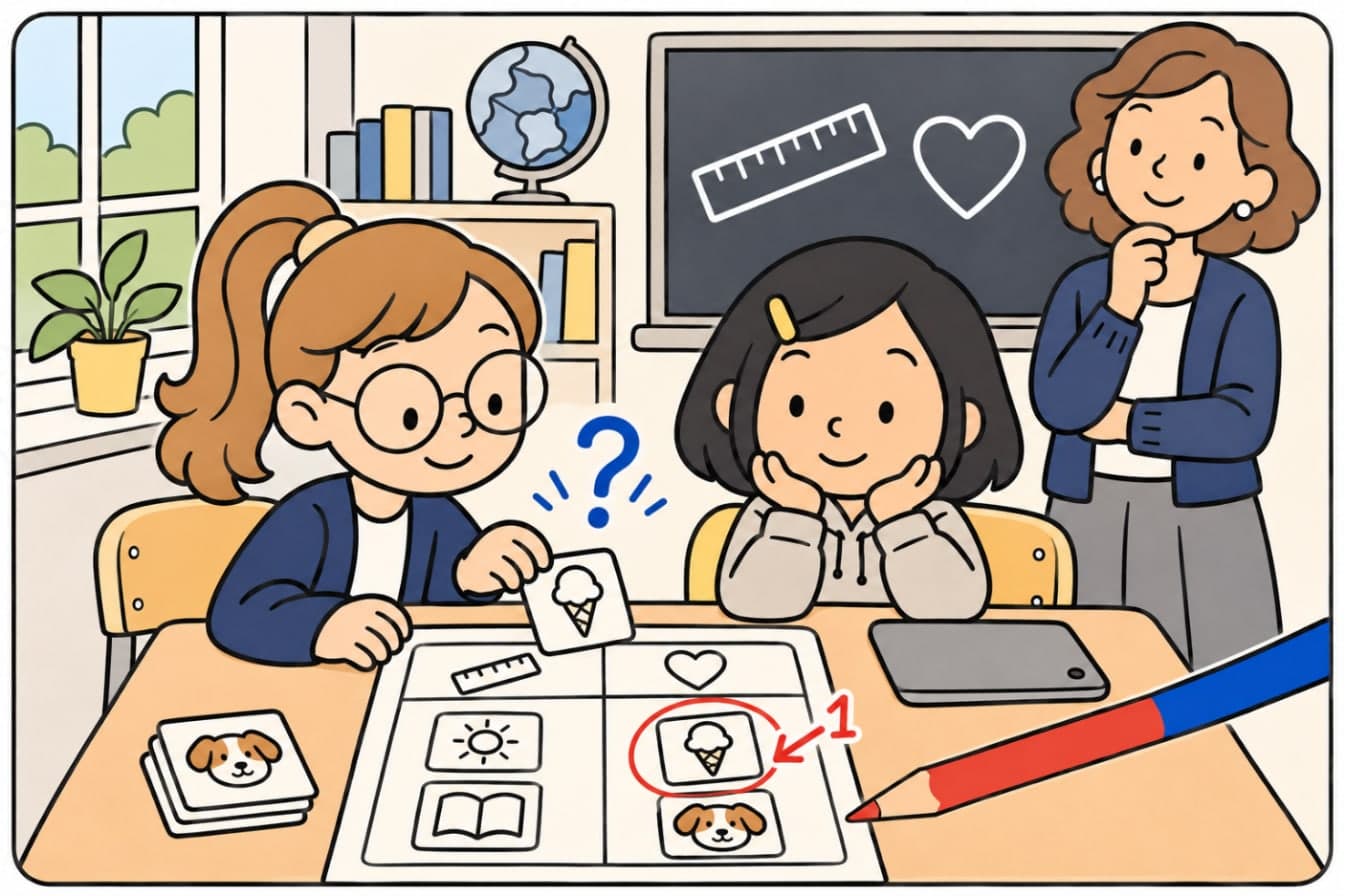
Drawn illustration: in the classroom Ema sorts picture cards into a two-column worksheet – a ruler for facts, a heart for opinions. The red pencil has circled the ice-cream card (1), with a blue question mark above the sheet. Linh sits beside her with her tablet face down, and the teacher stands by the board.

Free

Classroom mode

Show any mission on the board or projector: large text, games for the whole class, controlled with arrow keys or a presenter remote.

Free

Homework

A link or QR code for parents with every course. Children need no account and we store nothing about them.

Free

Warm-up at the start of a lesson · 5 minutes

Warm-up at the start of a lesson: one mission on the projector, 5 minutes. Results for the class only, no names.

Class kits

A 45-minute lesson for every mission: lesson plan, worksheet with answer key, links to media literacy learning goals, homework variants, advice for when a child confides in you, and diplomas for the whole class.

A class pack (€15.90) builds on the children's missions: a ready-made lesson with a worksheet for each mission and diplomas for the whole class – for primary school with Junior Detectives, for lower secondary with Not Falling for It. The course Media Literacy for Teachers: Ready-to-Teach Lessons (€40.00) is for teachers of lower and upper secondary school: four ready-made 45-minute lessons, a final test and a certificate for you.

Course for teachersPaid · €40.00Media Literacy for Teachers: Ready-to-Teach LessonsFour classroom-tested 45-minute lessons with minute-by-minute plans, worksheets and assessment – plus the principles for teaching critical thinking in a way pupils actually enjoy.See more →

Free

15 minutes for parents at a parents’ evening

Project three situations from the children’s missions and three that catch adults more often. Parents vote and the breakdown appears straight away. Free, no account, no preparation.

Open the presentation →Want a whole evening for parents with a trainer? Ask about an evening for parents

Tailored seminar for teaching staff

A live seminar on media literacy and artificial intelligence for the whole staff, followed by an online course and worksheets for lessons.

Enquire about a staff seminar →

A speaker for your class or staff roomTwo lessons for younger or older pupils, or a programme for the whole staff room. In Czech, in Czechia, for now.Kriticky naživo for schools →

Who prepared the missions

The missions were prepared by Pavel Cinkeis, MBA, MPA. Among other things, they draw on materials from child helplines and Safer Internet organisations – you'll find the sources on each course page. This does not mean these organisations have endorsed them.

Who is behind Kriticky.cz →

Safety and privacy

  • No children's accounts

    Children don't register and don't enter anything about themselves. Only adults create accounts, if they want to.

  • No ads, no tracking

    The missions contain no ads and no tracking tools from other companies.

  • Progress stays in the browser

    Only the browser on the device your child plays on remembers which missions are done. Clearing the site data deletes it.

  • The diploma name stays at home

    The name your child writes on the diploma is not sent or stored anywhere.

Details in our privacy policy →

Sensitive topics are not a game

Cyberbullying, misused photos or strangers who want more than they should – these are things to talk about with children, not to play. In the missions, children learn one thing: tell an adult you trust, or call the child helpline 116 111 (free in most EU countries). For adults:

How we fund it

The missions for children are free – no ads and no collecting data about children. They are paid for by what adults buy: class kits for teachers, paid courses and gift vouchers.

Courses for adults →Tailored for schools →