Manipulation atlas · Scams and data theft
Subscription trap
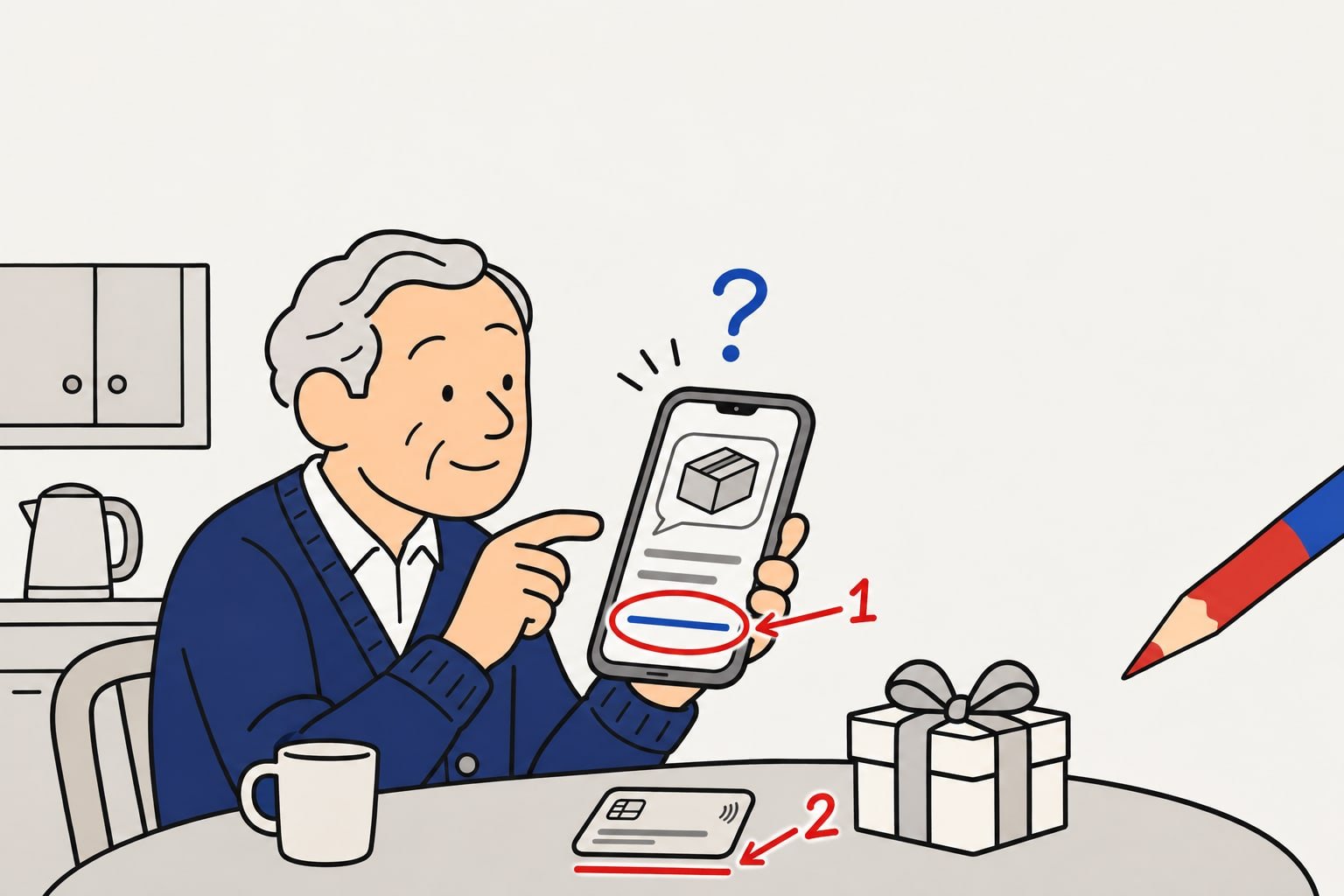
A prize, sample or trial “for just the postage” with a recurring card charge hidden in the small print.
Why it works on us
The offer looks like a gift: just pay the postage or “verify your card”. But the small print signs you up for a subscription, and recurring charges start leaving your card – sometimes for a service that has nothing to do with the offer.
Can you find the trick before you see the correction? Tap the parts that make you pause.
Private message after a social media giveaway
Congratulations, you’ve won a pram! To have it delivered, just pay €1 postage by card. *By paying, you agree to a €35 monthly subscription.
Private message after a social media giveaway
Congratulations, you’ve won a pram! To have it delivered, just pay €1 postage by card (note 1). *By paying, you agree to a €35 monthly subscription. (note 2)
- note 1, “just pay €1 postage by card”: A prize doesn’t need your card number
- note 2, “*By paying, you agree to a €35 monthly subscription.”: The real price is in the small print
Sample no. 21
What to do: Before entering your card, look for words like “subscription”, “membership”, “monthly” or “automatic renewal”. A trial offer must state clearly whether it is a subscription.
How to spot it
- You are asked to pay a small amount – €1, postage, “card verification” – for a prize or a free item.
- Payment is by card on an unknown page reached via a link in a message or an ad.
- The terms are hidden in small print, behind a link or in a long block of text.
- Pressure: “you have 24 hours to confirm”, “only 5 samples left”.
How to check and what to do
- Before entering your card, look for words like “subscription”, “membership”, “monthly” or “automatic renewal”. A trial offer must state clearly whether it is a subscription.
- Check the prize directly with the organiser – on an account or website you find yourself.
- Go through your card statement. Money taken without your consent? Contact your bank, have the card blocked and ask for the payments back (chargeback).
Tip: A real prize needs your address, not your card number.
The card fits on one A4 page – for the classroom, a noticeboard, or parents and grandparents.
Follow us: new scams and how to spot them
- kritickycz
- @kriticky.cz
- Kriticky.cz
Full explanation and exercises:thinkcritical.eu/en/manipulation-atlas/subscription-trap